
Top prompt security risks are prompt injection (direct and indirect), system prompt leakage, and agentic escalation through tool calls and memory. The immediate priority: assume every prompt can be abused, strip secrets out of prompts entirely, and enforce least privilege on any action a model can trigger, as outlined in the implementation playbook for AI citations.
TL;DR:
- USENIX research found near 100% retrieval and up to 80% execution in some workflows involving multiple agents, using black box attacks.
- Plain text presentation raises malicious instruction compliance, while preserving HTML or page snapshots lowers direct compliance, though structured formats can increase model errors.
- Keep privileged actions behind an external policy engine, validate outputs against strict schemas, and require human approval before high risk or irreversible actions.
- Red team tests should cover poisoned retrieval, hidden multimodal payloads, and cross session persistence; production monitoring should include canaries, tool logs, and RAG integrity checks.
- Centralized, auditable prompt libraries reduce accidental leaks caused by copied, outdated templates, but they complement rather than replace technical controls.
Table of Contents
- Mapping the Attack Surface: Injection, Leakage, and Agentic Escalation
- What the Research Actually Shows About Exploit Success
- Mitigation Patterns That Actually Reduce Blast Radius
- How to Red-Team and Monitor for Injection in Production
- A Sprint-Ready Checklist for Engineering and Security Teams
- How Prompt Governance Cuts Down Human Error
- Expert Perspective: Design for Graceful Degradation
- An Operational Layer for Safer Prompt Sharing
- FAQ
- Sources
Mapping the Attack Surface: Injection, Leakage, and Agentic Escalation
Direct prompt injection happens when an attacker types instructions straight into a chat interface to override the system prompt, often through role-play framing or encoded requests that slip past keyword filters. Indirect prompt injection (IPI) is more dangerous because the attacker never touches the model directly: they plant instructions inside a webpage, document, or email that a retrieval system later feeds into context. Researchers decompose these payloads into a trigger fragment, which guarantees the malicious content gets retrieved, and an attack fragment, which carries the actual instruction, a structure confirmed in large-scale empirical analysis of indirect prompt injection.
Multimodal and encoded payloads expand the surface further: zero-width characters, Base64 blobs, and text hidden inside images can carry instructions that text-only filters never see. Hidden channels like HTTP headers or document metadata offer the same cover.
Agentic systems multiply the stakes because compromised context does not stay inert:
- Tool calls can execute a poisoned instruction as a real-world action, not just generate text.
- Memory persistence lets a single injection survive across sessions.
- RAG poisoning corrupts the knowledge base itself, affecting every future query.
- Chained tool outputs can re-enter the model's context, letting one injection cascade into another.
What the Research Actually Shows About Exploit Success
The scale of indirect prompt injection in the wild is no longer theoretical. An empirical study of IPI prevalence identified a large number of validated indirect prompt injection instances across many webpages, with controlled experiments showing model compliance with malicious instructions reaching low but non-negligible rates in plain-text scenarios. The same research found that representation format matters: flattening content to plain text raises success rates, while preserving structural cues like HTML or page snapshots lowers direct compliance, though it can introduce more model errors, with weaker models consistently the most vulnerable.
End-to-end attacks escalate quickly once agentic workflows enter the picture. USENIX research on retrieval-based IPI demonstrated retrieval success near complete across benchmarks using the trigger-and-attack-fragment technique, with execution success reaching a high rate in some multi-agent workflows. Notably, these were black-box attacks that required no proprietary access to embedding models, which lowers the barrier for real attackers.

Beyond prompt-level exploits, the supply chain carries its own risk: template-injection and prompt-defense misconfiguration vulnerabilities have been cataloged in frameworks and agent runtimes, including CVE-2025-65106, a LangChain template-injection flaw.
Mitigation Patterns That Actually Reduce Blast Radius
The strongest principle in this space is architectural: keep dangerous capabilities out of the model's hands and mediate privileged actions through a deterministic policy engine outside the context window. OWASP's GenAI guidance on prompt injection treats the model itself as untrusted and recommends enforcing least privilege and modality-specific filtering rather than relying on the model to police itself.
A practical build order looks like this:
- Separate trusted instructions from untrusted data using structured prompts and clear delimiters, never concatenated free text.
- Validate every model output against a strict schema before it reaches a tool call or a user.
- Screen both inputs and outputs for injection patterns, and sanitize modalities (strip invisible characters, decode and inspect Base64 blobs).
- Restrict tool scopes and token permissions so a compromised response can only touch what it strictly needs.
- Require human-in-the-loop approval for any high-risk or irreversible action.
AWS security guidance on prompt injection reinforces separating instructions from data and screening outputs, and frames mitigation as an ongoing detection-and-response cycle rather than a one-time fix.
Layered defenses help but are not sufficient on their own.
Pro Tip: Treat every output destined for a tool call as if it came from an anonymous user on the internet, because functionally, it did.
Mitigation cycles never close: new bypass techniques appear as fast as filters are patched, so detection, response, and patch management need a standing cadence rather than a launch-day checklist.
How to Red-Team and Monitor for Injection in Production
Testing has to mirror the actual attack taxonomy rather than generic jailbreak prompts. Build red-team scenarios for direct injection attempts, IPI through poisoned retrieval documents, multimodal embedding attacks, and persistence across multi-agent sessions where one compromised turn survives into later turns.
Production telemetry should catch what tests miss:
- Canary tokens planted in system prompts reveal when a leak has actually occurred.
- Semantic similarity detection flags outputs that drift unexpectedly from expected intent.
- Response-diffing against known-good baselines surfaces subtle manipulation.
- Structured response validators reject outputs that do not match the expected schema before they reach a tool call.
- Action-proposal and tool-call logs (stripped of secrets) give incident responders a reconstructable trail.
Pair this with explicit incident playbooks that require human approval before a privileged action executes, and run periodic integrity checks on RAG corpora since a single poisoned document can compromise every future retrieval. Guidance on testing multi-step workflows, including multi-turn prompting patterns for engineers, is a useful reference when building these test suites.
A Sprint-Ready Checklist for Engineering and Security Teams
Risk reduction here does not require a quarter-long initiative. It breaks into three honest tiers:
- Immediate: Remove all secrets and credentials from prompts, add output schema validation before any tool call, and require explicit approval for external-facing actions.
- High priority: Segregate RAG stores from general-purpose content, sanitize ingestion pipelines by stripping zero-width characters and variation selectors, and restrict tool permissions and token scopes to the minimum needed.
- Ongoing: Schedule recurring penetration tests, subscribe to CVE and NVD feeds for the frameworks in use, and keep SDKs and prompt-templating libraries patched.
None of these tasks require new infrastructure. They require discipline applied consistently, which is where most teams actually fail.
How Prompt Governance Cuts Down Human Error
Most leaked secrets and stray injected instructions trace back to ad-hoc prompt sharing: a prompt pasted into Slack, copied into three different tools, and never updated when a vulnerability is found. Centralized, auditable prompt libraries with sharing controls close that gap by making one version the source of truth instead of a dozen forked copies.
Our own prompt management software went through an OWASP-aligned security audit, and we have published governance playbooks covering prompt governance practices and securing prompt sharing across teams that pair directly with the controls above.

Expert Perspective: Design for Graceful Degradation
The uncomfortable truth in this field is that prevention alone will keep failing. Every new filter trains the next bypass, so the teams actually reducing harm are the ones who assume compromise and design for a small blast radius instead of a perfect wall.
That means prioritizing containment and detection as equally as prevention, and treating testing, patching, and cross-team governance between security, engineering, and product as a permanent operating rhythm, not a post-incident fire drill.
— John
An Operational Layer for Safer Prompt Sharing
Architectural controls stop the worst outcomes, but someone still has to keep secrets out of prompts, version templates correctly, and make sure the whole team is working from the same reviewed source. That operational layer is where a lot of good security intent quietly falls apart.
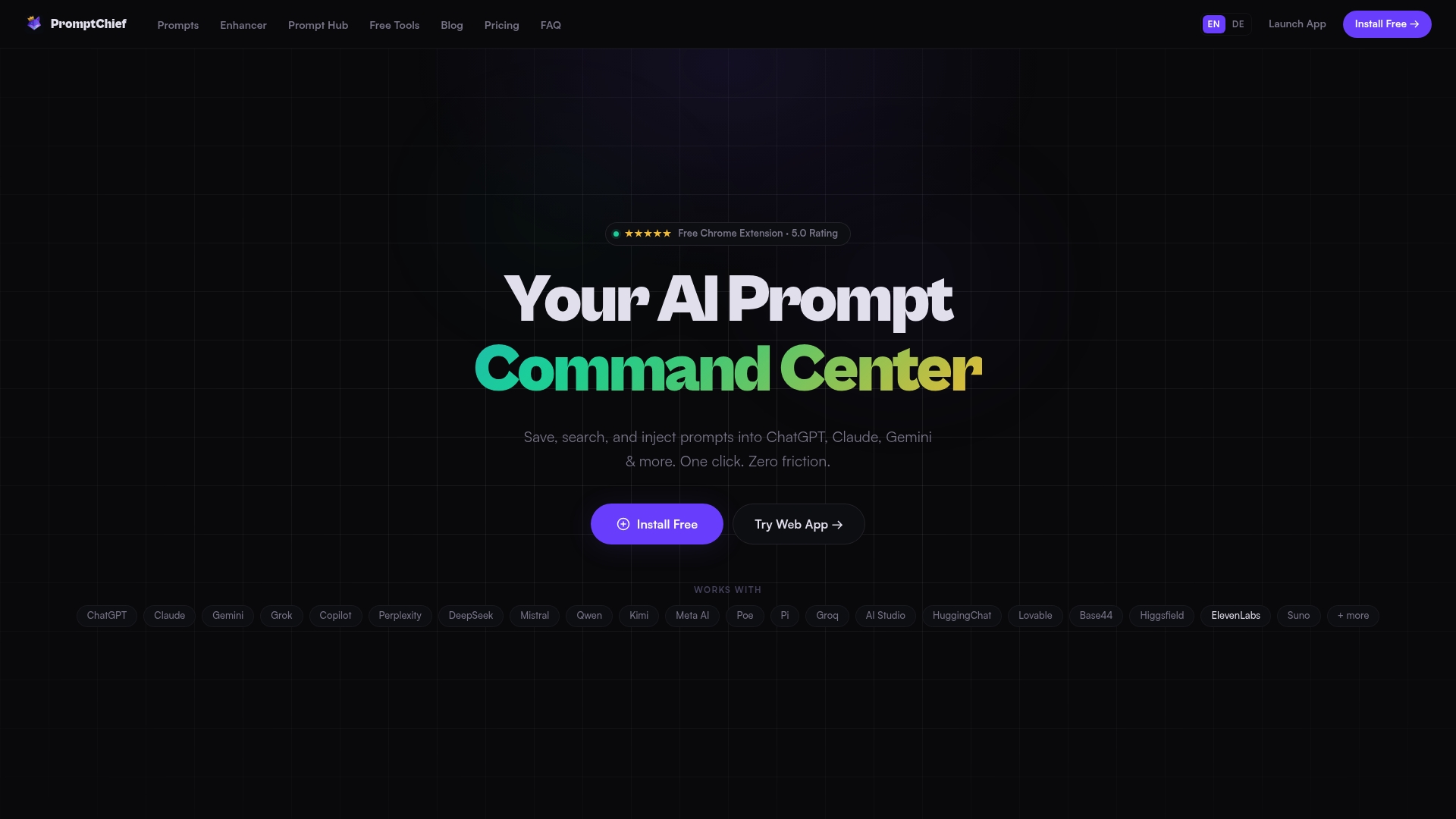
Our cloud-synced prompt manager gives teams a practical way to apply the governance habits covered above without adding friction to daily work.
- Centralized, searchable prompt storage instead of scattered documents and chat threads.
- Share controls and team workspaces that replace copy-pasted prompts with one audited source.
- Templates and fillable placeholders that keep structure consistent and reduce accidental leakage.
- Cloud sync across devices, so updates to a sanitized prompt propagate everywhere at once.
Compare plans and pricing to see which workspace tier fits your team's prompt volume.
FAQ
What are the top 3 AI security risks?
The three risks security teams consistently prioritize are prompt injection (direct and indirect), system prompt leakage, and agentic escalation through tool calls, memory, or RAG poisoning. OWASP's GenAI guidance treats prompt injection as the top risk precisely because it can trigger the other two.
What is prompt security?
Prompt security covers the practices and controls that protect AI systems from malicious or unintended instructions hidden in prompts, retrieved content, or model inputs. It spans architectural defenses like least privilege and input/output screening, plus governance practices like centralized prompt management and audit logging.
What are the three types of security risks in AI prompting?
The main categories are injection-based risks (direct and indirect prompt injection), exposure risks (system prompt and hidden context leakage), and escalation risks (agentic systems taking harmful actions through tool calls or persistent memory). Each category needs a distinct mitigation approach rather than a single generic filter.
How do indirect prompt injection attacks actually succeed?
Attackers split the payload into a trigger fragment, which ensures the malicious content gets retrieved by a RAG system, and an attack fragment, which carries the actual instruction. USENIX research found this technique achieved near-100% retrieval success and up to 80% execution success in some multi-agent workflows.
Can prompt management tools help reduce these risks?
Centralized prompt management reduces one specific failure mode: careless copy-pasting and unaudited prompt sharing that leads to accidental secret exposure. Our own platform underwent an OWASP-aligned security audit, though it complements architectural controls rather than replacing them.
Sources
- Indirect Prompt Injection in the Wild: An Empirical Study of Prevalence, Techniques, and Objectives
- Overcoming the Retrieval Barrier: Indirect Prompt Injection in the Wild for LLM Systems
- LLM01:2025 Prompt Injection - OWASP Gen AI Security Project
- Safeguard your generative AI workloads from prompt injections (AWS Security Blog)