
Yes, most major chat platforms let you switch models mid conversation, and the switch takes effect on your very next message. The real question isn't whether you can, but whether you should right now. Expect a slower first reply as the new model rebuilds context, some risk of behavioral drift on the next few turns, and higher token cost on long threads. The fix is simple: switch at a natural task boundary and give the new model a one-line handoff.
TL;DR:
- Switching models during a chat triggers a full reprefill, which increases first-turn latency and can cause temporary behavioral drift.
- The model cache built during a session is not transferable across different architectures, requiring each model to rebuild context from scratch.
- Model switches at task boundaries are safer and less disruptive than mid-sentence changes, especially for sensitive or format-specific prompts.
- Automated fallbacks to conservative models often occur when safety flags trigger, and they persist until manually reverted by the user.
- Using pre-stored handoff prompts and coordinated prompt management tools reduces risks and improves consistency when changing models on the fly.
Table of Contents
- How Do You Switch Models Mid-Chat?
- What Happens Under the Hood When You Switch?
- Does Switching Models Mid-Chat Hurt Output Quality?
- When Should You Actually Switch Models Mid-Conversation?
- How Do You Reduce Risk When Switching Models?
- What Happens During an Automatic Model Fallback?
- Quick Checklist Before You Switch Models
- The Real Cost of Switching Isn't Speed, It's Context Loss
- Keep Your Handoff Prompts Ready When You Switch Models
- Sources
- FAQ
How Do You Switch Models Mid-Chat?
The mechanics are almost identical across platforms. You pick a new model from a menu, and it takes over starting with the assistant's next response, not retroactively.
On Claude, the model menu sits next to the send button, and switching there also lets you adjust effort and thinking settings without starting a new chat. GitHub Copilot Chat works the same way: a model dropdown in the chat view lets you change models, with the switch applying to subsequent messages only. If you work in Claude Code, you get command-line control instead of a menu.
Here's where to look on each platform:
- Claude (web/app): model menu icon beside the send button
- GitHub Copilot Chat: dropdown at the top of the chat panel
- Claude Code: the
/modelcommand mid-session, or the--modelflag to set a default for the whole session
A quick sequence for switching mid-task:
- Finish your current exchange or pause at a logical break
- Open the model selector for your platform
- Choose the new model
- Add a short note in your next message stating what you need it to preserve
One quirk worth knowing: some workspace admins lock default models, so your dropdown might show fewer options than the docs describe. If the model reverts on a new chat, that's the workspace default reasserting itself, not a bug.
What Happens Under the Hood When You Switch?
Every model response starts with prefill, a forward pass where the model reads your entire chat history and builds a KV cache, the internal memory structure it uses to generate the reply efficiently. Prefill cost scales with both model size and context length, so a switch on a 40-turn conversation is far more expensive to reprocess than a switch on turn two.
Here's the part that trips people up: KV caches aren't portable. Each model builds its cache in a format shaped by its own architecture and training. Hand a Claude-built cache to a different model and it can't use it. So the receiving model has to reprefill the entire conversation from scratch, reading every prior message and reconstructing its own internal representation before it can even start drafting a reply. That's the slow first turn you feel right after switching.

There's a deeper issue than speed, too. A model that didn't generate the earlier turns is essentially reading someone else's notes. It has to infer tone, unstated constraints, and reasoning steps it never actually performed, which is part of why replies right after a switch can feel slightly off, even when the facts are correct.
Research callout: Cross-model KV cache transfer is an active research fix for the reprefill tax. A closed-form per-head ridge mapper can reuse a source model's KV cache instead of rebuilding it, with reported strong accuracy retention on well-matched model pairs and substantial speedups over full reprefill. The catch: it only works when the KV heads and dimensions line up between the two models, and it needs a calibration set tuned to that specific pair. It's not a plug-and-play fix you can apply between two arbitrary vendors' models today.
Does Switching Models Mid-Chat Hurt Output Quality?
It can, and the effect is measurable, not just anecdotal. A switch-matrix benchmark tested single-turn handoffs across model pairs and found statistically significant, directional drift on conversational benchmarks, with gaps in some cells comparable to jumping a full model tier.
The numbers get specific. On strict success for the Multi-IF benchmark, handoffs produced swings in performance that varied notably depending on the model pairing, entirely depending on which model handed off to which. On CoQA, measured F1 showed modest shifts in either direction. The direction isn't random: some models produce prefixes that transfer cleanly, and some are more susceptible to inheriting a foreign prefix's quirks. That asymmetry means switching from Model A to Model B can behave completely differently than switching from B to A.
- First-post-switch replies run slower due to full reprefill, especially on long threads
- Token and compute cost jumps on that first turn since the whole history gets reprocessed
- Quality drift shows up mostly in the immediate next turn or two, then tends to stabilize
- Some model pairs are simply safer to switch between than others, and you won't know which without testing
For teams routing between models automatically, this is the finding that matters most: pair-specific behavior means you can't assume a switch is neutral just because both models are capable on their own.
When Should You Actually Switch Models Mid-Conversation?
Treat model switches like you'd treat handing off a project to a new team member. Do it at a clean break, not mid-sentence.
- Brainstorm with a fast, cheap model. Volume matters more than polish here, so let a lighter model generate options quickly.
- Draft with a mid-tier model once you've picked a direction worth developing.
- Switch to your strongest model for critique and final polish, where reasoning depth and accuracy actually earn their higher cost.
- Avoid switching mid-format or mid-safety-check. If you're deep in a strict JSON schema or a compliance-sensitive answer, a switch risks breaking the format or losing context on constraints that were never explicitly restated.
This cascade pattern, cheap model for exploration, strong model for verification, is one of the more common workflows platform docs and user reports describe, and it lines up with how the cost structure actually works: you're not paying premium rates for early-stage noise.
Pro Tip: If you must switch during a safety-critical or tightly formatted task, don't just switch and continue — always verify your changes with an AI Code Review for GitHub to catch issues before merging. Paste a two-sentence handoff first: state the exact format required and the last confirmed decision. It costs you ten seconds and it's the single cheapest way to counter behavioral drift.
How Do You Reduce Risk When Switching Models?
The single highest-leverage mitigation costs nothing: a short handoff summary. Before your next message after a switch, add one to three sentences stating the required output format, any hard constraints, and the last decision that was confirmed. This gives the new model explicit ground truth instead of forcing it to infer everything from a reprefilled history it's reading cold.
For anyone running multi-model systems at scale, the mitigation stack gets more structured:
- Log the authoring model per turn, so you can trace exactly which model generated which part of a conversation when something goes wrong
- Run handoff regressions before routing changes. Replay representative conversation prefixes through candidate model pairs and measure the expected metric delta before enabling any automatic routing policy
- Watch first-post-switch metrics specifically, since that's where drift concentrates
- Consider KV-transfer or shared-cache approaches for latency-sensitive deployments, with the tier below outlining the trade-offs
| Approach | What it solves | Main trade-off |
|---|---|---|
| Handoff summary prompt | Behavioral drift, lost constraints | Manual, easy to forget |
| Per-pair ridge mapper KV transfer | Reprefill latency within matched model families | Needs calibration set, family-locked |
| Shared-cache serving (e.g. SwiftCache-style coordination) | Cross-model cache reuse at the serving layer | Added system complexity, memory overhead |
| Handoff regression testing | Unknown pair-specific risk | Requires upfront testing time |
None of these are mutually exclusive. Most production teams that switch models automatically use a handoff prompt as the baseline and layer regression testing on top before trusting a new routing rule.
What Happens During an Automatic Model Fallback?
Sometimes you don't choose the switch. Safety classifiers can trigger an automatic fallback to a more conservative model when they flag something in your message, and platforms typically label this in the interface so you know a swap happened.
That fallback usually persists for the rest of the conversation until you manually revert it. If automatic switching is disabled in your settings, the same trigger instead pauses the conversation and asks you to edit the flagged message rather than silently swapping models under you.
- Check the model label after any unexpected tone or capability shift, it may already have switched
- Edit and resend the flagged content if you want your original model back
- Toggle automatic switching off in settings if you'd rather handle flags manually
- Save a screenshot or copy of the fallback state if you're debugging a workflow that depends on a specific model
Quick Checklist Before You Switch Models
Run through this before hitting send on the first message to your new model:
- Save or copy anything critical from the current thread, in case context gets lost
- Note any active constraints (format, tone, length) explicitly, don't assume they'll carry over
- Pick your switch point at a task boundary, not mid-format or mid-reasoning chain
Paste-ready handoff prompts:
- "Continue this task. Required output format: [format]. Do not deviate from it."
- "Here's what we've confirmed so far: [one to two sentence summary]. Build on this, don't restart."
- "Before continuing, verify: [specific fact or decision] is still accurate, then proceed."
On the first reply after switching, check three things: does it match your format exactly, does it respect stated constraints, and does anything look invented or inconsistent with earlier turns. Catching drift in that first response is far cheaper than catching it three messages later.
The Real Cost of Switching Isn't Speed, It's Context Loss
Most guidance on this topic focuses on latency, and that's the easy problem. The harder one is that every model switch is a small trust transfer. You're asking a system that never generated your earlier reasoning to continue it faithfully, and the switch-matrix research confirms that trust isn't always warranted, drift is real and it's pair-specific.
Where multi-model workflows actually pay off is the cost-quality cascade: cheap model for volume, expensive model for judgment. But that only works if the handoff between them is deliberate. The teams that get burned are the ones treating every model as interchangeable mid-task.
This is also where prompt discipline stops being a nice-to-have. A well-organized prompt library means your handoff instructions, format anchors, and verification prompts are one search away instead of something you're retyping from memory at 11 PM. The friction of switching models isn't really about the models. It's about how much context lives in your head versus somewhere you can retrieve it instantly.
— John
Keep Your Handoff Prompts Ready When You Switch Models
Some prompt management tools give you a place to store handoff summaries, format anchors, and verification requests so they are saved once and ready to paste the moment you switch models, instead of rewritten from memory every time.
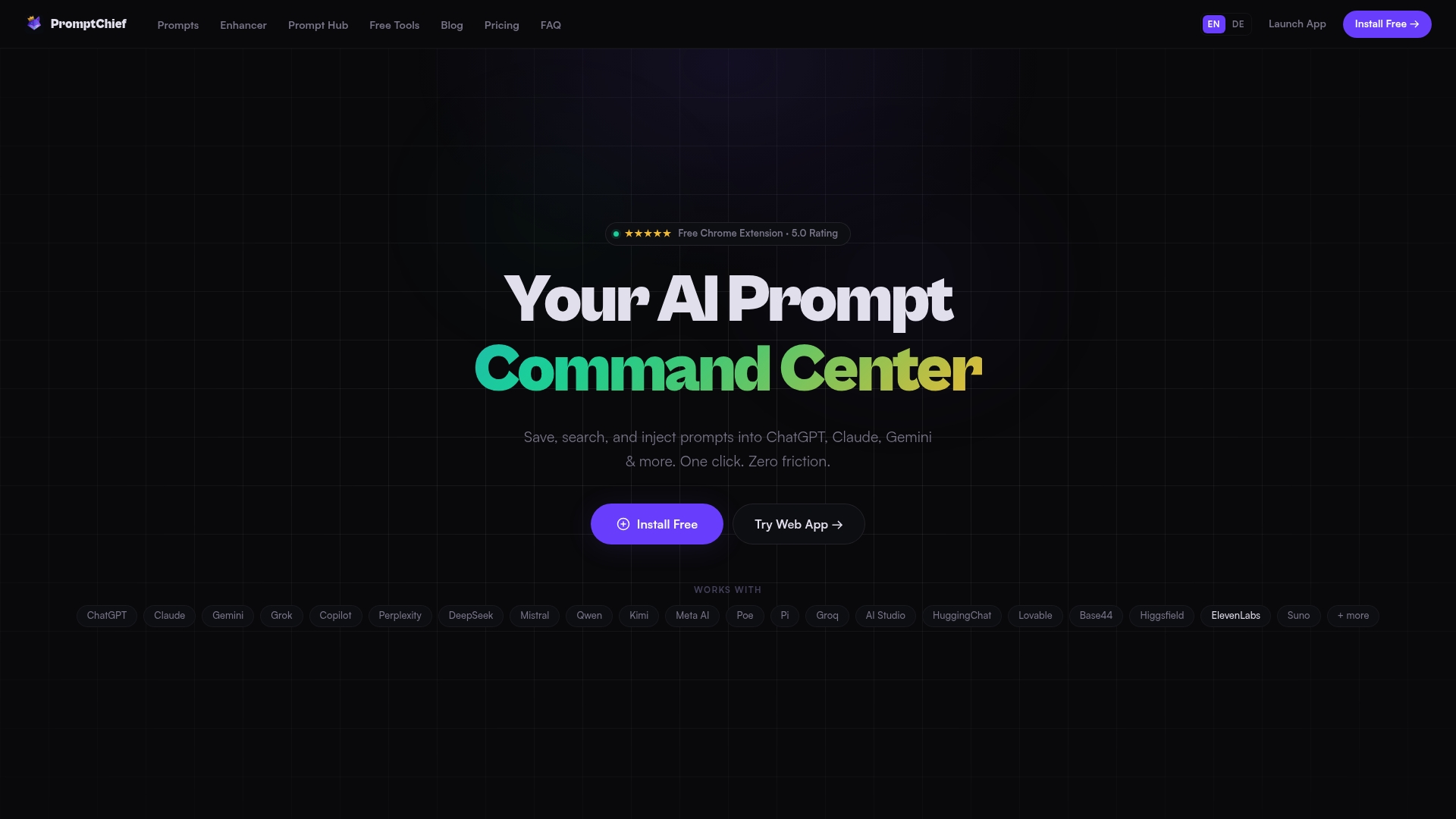
The prompt management system syncs across devices, so a handoff template you build on your laptop is available on your phone the next time a conversation needs a quick model change. Save your "continue this task, required format is X" prompt once, tag it, and pull it up in seconds through fuzzy search instead of scrolling old chats hoping you remember the exact wording. That matters most on long threads, where retyping constraints accurately is exactly the kind of small task that's easy to get wrong under time pressure.
If you're switching between ChatGPT, Claude, and other tools regularly, the browser extension injects your saved prompts directly into whichever platform you're using. Check the pricing page for current plans, or start with the free tier and build your first handoff template today.
Sources
- Change the model, effort, and thinking settings (Claude support)
- Change the chat model (GitHub Copilot docs)
- Cross-model KV cache transfer in LLM families: A closed-form linear mapping for prefill reuse
FAQ
Can Claude switch models mid-chat?
Yes. Claude's model menu sits next to the send button, and you can change the model at any point in an existing conversation. The new model takes over starting with its next response, not retroactively.
How do I switch models in ChatGPT?
ChatGPT offers a model picker in the chat interface where you select a different model for your next message, similar to how GitHub Copilot Chat's dropdown works. The switch applies going forward, so earlier responses stay generated by whichever model produced them.
What are the main AI model types people switch between?
Most chat platforms offer a tiered lineup: a fast lightweight model for quick tasks, a balanced mid-tier model for general use, a high-capability model for complex reasoning, and sometimes a specialized model for coding or extended thinking. The exact names and tiers vary by provider and platform.
How do I change the Claude model in the app?
Tap the model menu icon beside the send button in the Claude app and select a different model from the list. The same control also lets you adjust effort and thinking settings without leaving your current conversation.
Does switching models mid-chat erase my conversation history?
No, your message history stays intact, but the new model has to reprefill that entire history to build its own working memory of the conversation. That reprefill is why the first reply after a switch often takes longer to arrive.